HYDRILLA REMOVAL · AUSTIN, TX
Hydrilla removal for Austin-area lakes, done by hand
We pull and cut hydrilla at the root around docks, boat lifts, shorelines, and swim areas, then bag and haul every bit of it away. No herbicides, no mechanical harvesters, and no fragments left behind to start the next mat.
Waterline Weed Co. removes hydrilla manually on Lake Travis, Lake Austin, Lake LBJ, Lake Marble Falls, plus Canyon Lake by request. We use long-handled rakes and underwater cutting blades, collect everything we cut, and haul it off-site. Quotes are free. Call or text (775) 856-9005.
Why hydrilla needs a different kind of removal
Hydrilla (Hydrilla verticillata) is an invasive submerged plant. It roots in the lake bed and grows long stems up to the surface, where it spreads into dense mats. In Texas it's a prohibited exotic species, so it can't be sold or transported, and it's one of the most common reasons docks and boat lifts on the Highland Lakes become unusable in summer.
The trouble is how it spreads. A small broken piece of stem can root and grow into a new plant. So running a boat through it, mowing it, or cutting it and letting it float away can make an area worse. Good removal comes down to two things: get it at the base, and take all of it out of the water.
Our hydrilla removal process
- Walk the water. We look at depth, density, and where the plants are rooted, and spot anything to work around, like lift cables, electrical lines, and swim ladders.
- Pull and cut at the root. Long-handled rakes lift the surface mat. Underwater cutting blades sever stems at the base instead of just trimming the top.
- Bag and haul everything. All cut material is collected, bagged, and hauled off-site, so nothing is left to drift and re-root at your neighbor's dock.
- Final check. We check for open water and clarity, and if regrowth is likely we recommend a maintenance schedule.
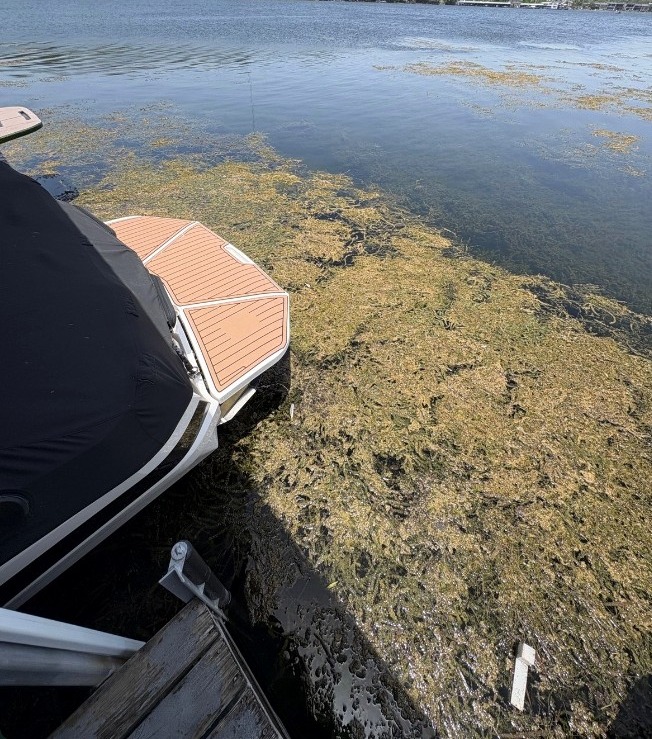
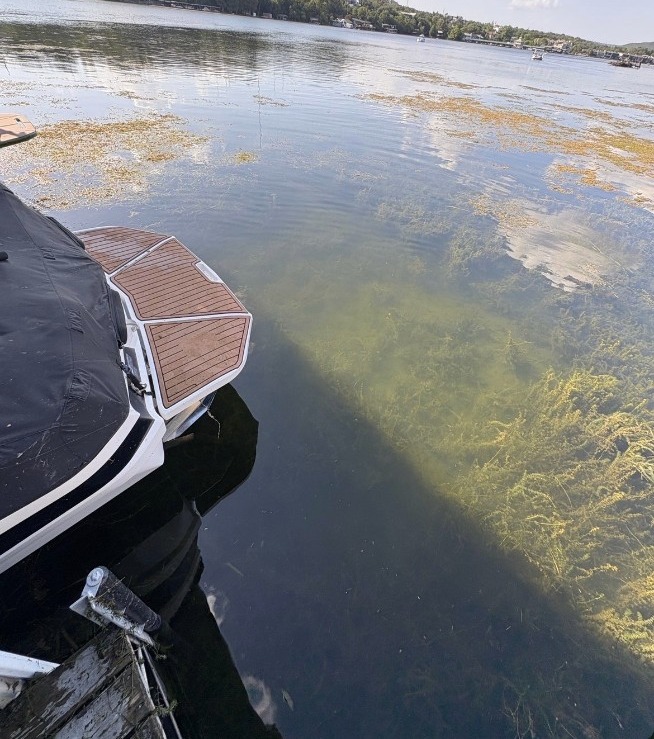
Before and after: a Lake Austin dock
This is one of our real jobs on Lake Austin. The wakeboat had been sitting in a solid mat of hydrilla. Same boat, same dock, same day after hand removal:
Where we remove hydrilla
We work residential and HOA waterfronts across the Highland Lakes: Lake Travis, Lake Austin, Lake LBJ, Lake Marble Falls, Canyon Lake (by request). Constant-level lakes like Lake Austin, Lake LBJ, and Lake Marble Falls tend to have the most persistent problems, because steady water levels give hydrilla stable shallow habitat all season.
What we clear
- Docks and boat lifts: pilings, slips, lift cables, and the path your boat takes in and out
- Shorelines: banks and shallow edges where growth creeps back in
- Swim areas: cleared bottom to surface so they're comfortable and safe to use
- Seasonal maintenance: repeat visits so it never gets back to a full mat
Hydrilla removal FAQ
What is the best way to get rid of hydrilla around a dock?
For a residential dock, boat lift, or swim area, careful manual removal is usually the best fit. You get immediate open water with no chemical restrictions, no waiting period before swimming, and no fragments left behind if the cut material is collected. Larger lake-wide infestations are usually handled by lake authorities with methods like sterile grass carp or permitted herbicide programs. Compare every method.
Is hand removal better than cutting or mowing hydrilla?
Mowing and cutting without collecting are what make hydrilla spread. Hydrilla can regrow from small stem fragments, so any method that leaves pieces floating in the water can start new patches. We cut at the base and bag everything we cut.
How long does hydrilla removal take?
Most single-dock and boat-lift jobs take one visit. Bigger shorelines or swim areas with dense, surface-matted growth can take longer. We'll give you a time estimate along with your quote.
How long will the water stay clear?
That depends on the lake, water depth, and how much hydrilla is growing nearby. Hydrilla regrows from tubers buried in the sediment, so in heavy areas we recommend seasonal maintenance visits during the growing season.
Do you use any chemicals or herbicides?
No. Everything we do is manual: rakes, underwater cutting blades, bags, and a truck to haul it away. That makes it safe to swim, fish, and let pets in the water right after we finish.
Get your dock back.
Text a photo of the area to (775) 856-9005 for a free hydrilla removal quote.